






You wash your face every morning. You use your anti-acne serum religiously. And still — your skin feels tight, looks dull, and the breakouts refuse to leave. Sound familiar?
Here’s the twist most people with oily or acne-prone skin don’t see coming: winter is just as brutal for you as it is for someone with dry skin. Maybe more. And the answer isn’t a thick, heavy cream. It’s understanding what your skin barrier is actually going through — and giving it exactly what it needs.
Let’s break it all down.
The Winter Skin Problem Nobody Talks About for Oily Skin
There’s a widespread belief that oily skin doesn’t need moisturizer. That your sebum is doing all the heavy lifting. That moisturizing will make your skin greasier, clog your pores, and trigger more breakouts.
This is one of the most damaging skincare myths in circulation.
When winter arrives — whether you’re in a dry Delhi winter or a humid coastal chill — the drop in humidity, cold outdoor air, and drying indoor heating all work together to strip moisture from your skin. This is called transepidermal water loss (TEWL), and it happens regardless of how oily you are.
Your skin responds to this moisture loss by ramping up oil production to compensate. The result? A face that looks oily but feels tight underneath. A skin that’s simultaneously greasy on the surface and dehydrated at the cellular level.
Now add acne-prone skin into the mix. Dead skin cells accumulate faster on acne-prone skin, and when your barrier is already compromised, that excess oil has nowhere to go — it mixes with those dead cells and clogs your pores. That’s your winter breakout cycle. Not from too much moisture. From not enough of the right kind.
What Actually Happens to Your Skin Barrier in Winter
Your skin barrier — the outermost layer — is made up of cells held together by lipids (fats). Think of it like a brick wall: cells are the bricks, lipids are the mortar. In winter, cold air and low humidity erode that mortar faster than your skin can rebuild it.
When that mortar is gone, two things happen:
- Water escapes freely (TEWL goes up)
- Environmental irritants, bacteria, and pollutants enter more easily
For acne-prone skin, this is a dangerous loop. A weakened barrier means your skin is more susceptible to the bacteria that cause acne. It also means your active skincare products — salicylic acid, benzoyl peroxide, retinol — will irritate the skin far more aggressively than they normally would, because there’s no barrier left to protect you.
The tight, dry sensation you feel after washing your face? That’s not clean skin. That’s a stripped, vulnerable skin barrier asking for help.
What to Look for in a Moisturizer for Oily Acne-Prone Skin in Winter
This is where most people go wrong. They either skip moisturizing entirely, or they grab something thick and heavy thinking they need more moisture. Both approaches backfire.
What your skin actually needs is a lightweight, oil-free moisturizer that repairs the barrier and locks in hydration — without adding oil to the surface or congesting your pores.
Here’s what to look for:
|
Ingredient |
What It Does for Acne-Prone Skin |
|
Ceramides |
Replenish the lipids your barrier lost; prevent moisture escape |
|
Panthenol (Pro-Vitamin B5) |
Deep hydration + accelerates skin healing and repair |
|
Niacinamide |
Calms redness, tightens pores, regulates sebum |
|
Zinc PCA |
Controls excess oil without drying the skin |
|
Glycerin |
Pulls water into skin cells; lightweight humectant |
|
Dimethicone |
Forms a breathable layer to seal in hydration |
Avoid heavy butters, coconut oil, and fragrance. These either clog pores or irritate an already sensitive winter barrier.
Introducing the Best Winter Moisturizer for Acne-Prone Skin You Haven’t Heard Enough About
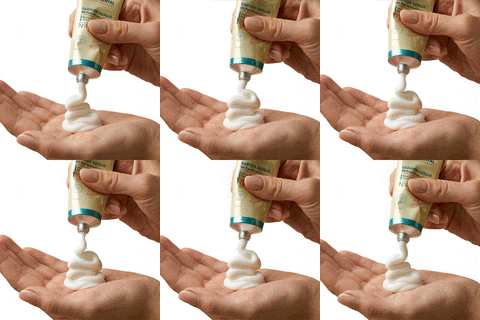
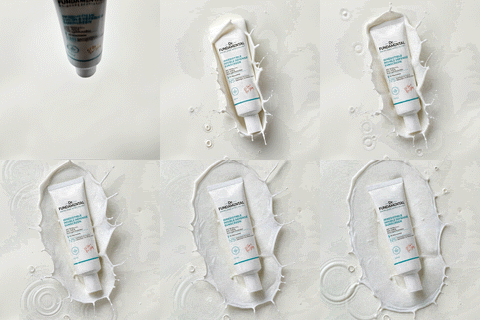
Dr. Fundamental’s N0.4 Barrier Repair Oil-Free Moisturizer was built precisely for this problem. It’s not trying to be a luxury cream or a trend-driven formula. It’s a clinically focused, barrier-first moisturizer designed for Indian acne-prone skin that gets stripped raw by winter and then over-treated with active serums.
Here’s what makes it stand apart:
5% Panthenol — Most moisturizers use panthenol at under 1%. A 5% concentration actively repairs the skin barrier, not just hydrates it. Users in clinical testing reported relief from tightness and barrier discomfort within 5 minutes of the first application.
Ceramide Complex (NP + AP + EOP) — These are the three ceramides your skin actually has in its natural barrier. Not generic ceramides — the specific ones that matter for barrier reconstruction and long-term skin resilience.
Zinc PCA — Keeps sebum in check so your skin stays matte and clear even as you hydrate deeply. This is what makes it a true moisturizer for oily acne-prone skin, not just a moisturizer that tolerates oily skin.
Niacinamide — Reduces post-acne redness, supports healing, and keeps pores from looking enlarged through the dry winter months.
100% Oil-Free. Non-Comedogenic. Fragrance-Free. Dermatologically Tested.
No grease. No pore-clogging. No irritation triggers. Just a skin barrier that’s actually doing its job.
In clinical results:
- 97% of users felt improved skin elasticity and reduced dryness with consistent use
- 84% saw a reduction in post-acne redness without clogged pores
- 61% noticed relief from tightness within 5 minutes of first application
At ₹550, this is accessible skincare that punches well above its price point — and it fits seamlessly as Step 4 in Dr. Fundamental’s full acne routine.
How to Use It as Part of Your Winter Skincare Routine
Morning:
Cleanser → Serum (if using) → Dr. Fundamental Barrier Repair Moisturizer → Sunscreen
Night:
Cleanser → Active serum (Salicylic Acid, Niacinamide, etc.) → Apply a slightly more generous layer of the moisturizer on dry or irritated areas
If you’re using Benzoyl Peroxide or a retinoid, apply the moisturizer right after — it helps buffer irritation while keeping your barrier intact.
Pro tip: Apply within 1-2 minutes of patting your face dry. This locks in the water that’s still on your skin’s surface and gives hydrating ingredients the optimal environment to absorb.
The Oily Skin in Winter Checklist
Before you go, here’s a quick scan of what’s hurting your winter skin:
- Skipping moisturizer because “my skin is already oily”
- Using heavy cream thinking more is better
- Hot showers (they strip your barrier almost as fast as cold air)
- Over-exfoliating in winter
- Using fragrance-heavy products on already-sensitive winter skin
And what’s actually helping:
- A ceramide-based, oil-free moisturizer for acne-prone skin
- Lightweight, water-based layers
- SPF every morning, even in winter
- Applying moisturizer on slightly damp skin
- Reducing the frequency of harsh actives when your barrier is compromised
Final Thought
Your oily skin doesn’t exempt you from winter dryness — it just hides it better. The tightness you feel, the unexpected breakouts, the irritated skin after your usual products? That’s your skin barrier telling you it’s under attack.
The fix isn’t more drying products. It’s a smarter, more targeted approach to hydration — one that works with your skin type instead of against it.
Dr. Fundamental’s Barrier Repair Oil-Free Moisturizer gives oily, acne-prone skin exactly what it’s missing this winter: deep hydration, active barrier repair, and clean pores — all without a gram of grease.


